Why I bought a S$699 toothbrush after my last S$500 smart toothbrush failed me
Living article — first published September 2026.
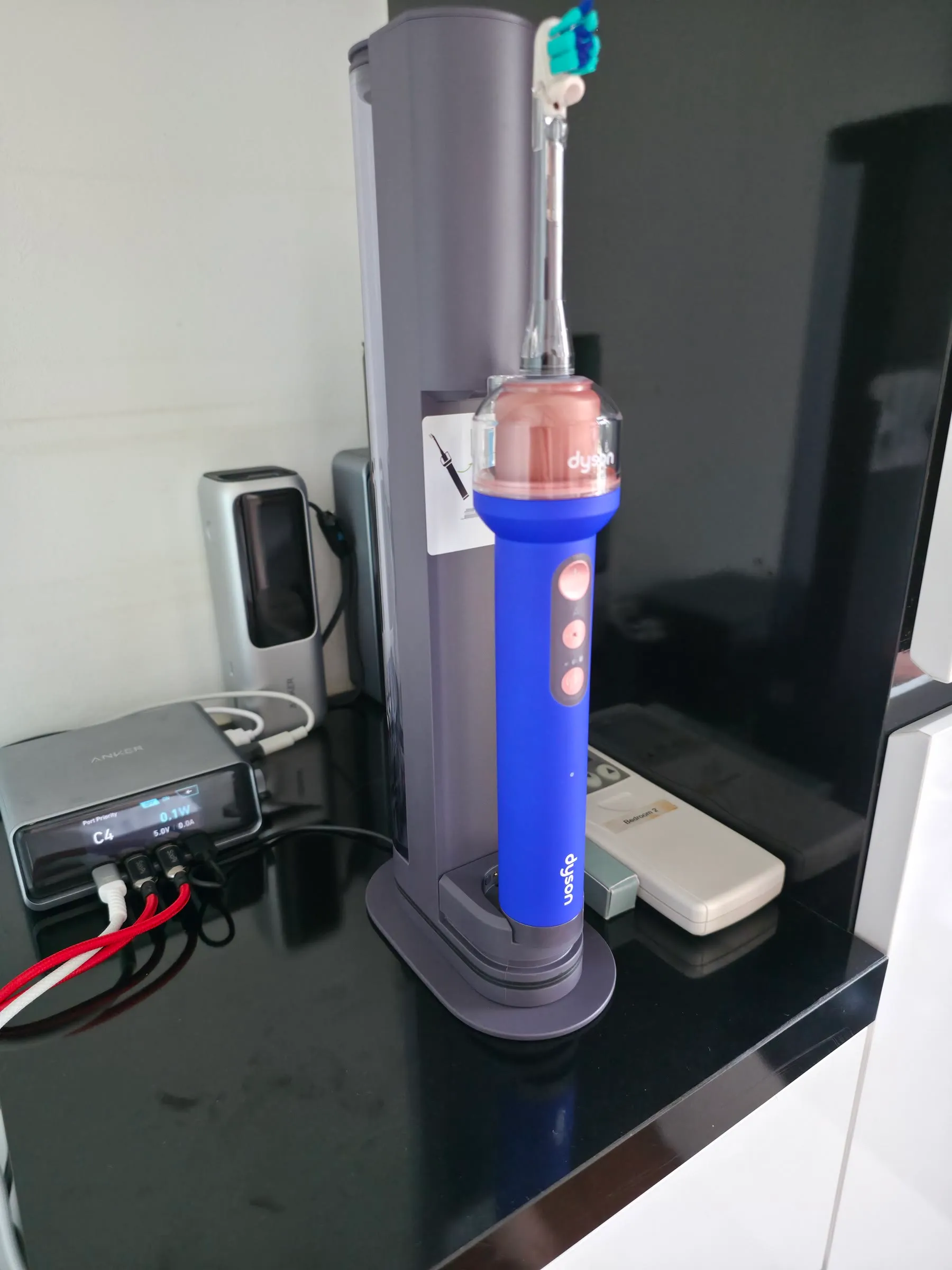
This is not a final review. I bought the device with our own money. Dyson has no involvement in this article, no editorial control, and probably no idea what it has gotten itself into. This is also an explicit collaboration between Carlos KiK and Kage-sensei, my AI research copilot.
I buy, use, measure, photograph, overthink, reverse-engineer and live with the hardware. Kage-sensei researches claims, challenges my conclusions, designs experiments, remembers what I forgot and occasionally tells me:
“Nope. That conclusion is not supported yet.”
That is part of the article, not something we hide.
I did not need another toothbrush
I already own one of the most expensive “smart” toothbrushes money could buy: an Oral-B iO Series 9. It is sitting in a box. Nearly pristine. With unopened replacement heads I bought in advance because, naturally, I optimized the consumables before establishing whether I actually wanted to use the thing.
The problem was not brushing performance. The problem was that its supposed intelligence was useless to me. The positional tracking behaved like a drunk IMU. It would lose orientation, catch up, fall behind and occasionally decide that I was brushing an entirely different quadrant.
I even tried rotating the toothbrush across all three axes like an idiot calibrating a smartphone compass. Nothing fixed it. Once I stopped trusting the telemetry, the entire smart layer became noise. Then the app became another gamified thing asking for attention while trying to sell me consumables.
I stopped using it. And I have periodontal disease. So my problem is not:
“Carlos needs a more expensive toothbrush.”
My problem is adherence. If I cannot see a problem and I cannot feel a problem, my brain is remarkably capable of deciding that the problem does not exist. If I see it? Different story.
Show me something wrong and my brain immediately turns it into an engineering fault that needs fixing. Years ago, a €10 dental mirror already demonstrated this. The moment I managed to see something behind a tooth that looked wrong or dirty, I wanted it gone. The CameraJet put an actual camera in my mouth.
That is why I bought it.
The internet thinks this is insane
And yes, S$699 is a ridiculous amount of money if the question is:
“How much should a toothbrush cost?”
Reddit’s launch reaction contains plenty of variations of “who pays this much for a toothbrush?”, mixed with people pointing out that premium Oral-B and Philips products already live in surprisingly stupid price territory. But I think that is the wrong question. I did not buy CameraJet because I wanted a better toothbrush.
I bought:
- a toothbrush,
- a targeted oral irrigator,
- a macro intraoral camera,
- onboard optical gap detection,
- live video,
- an inspection tool,
- and hopefully a behavioral compliance machine.
Those things happen to have been bolted into one increasingly ridiculous object.
Kage-sensei:
This is the part where I would normally say: “No, you do not need a S$699 toothbrush.”
Unfortunately, the use case survived contact with reality.
What I think Dyson actually built
Dyson markets CameraJet as: “Sees. Thinks. Jets.”
Very Dyson. But the engineering story is more interesting than the slogan. A normal portable water flosser has a stupid problem: it fires continuously whether you are aiming correctly or not.
You waste water. You fill your mouth. You spit constantly. Tilt the reservoir far enough and the intake starts sucking air.
If Dyson wanted tiny, precisely targeted bursts, it needed to know when the nozzle was actually looking at an interdental gap. That means sensing. Inside a dark, wet, moving human mouth. So now you need optics.
Optics need illumination. Moving optics need fast processing. The jet needs a pump that works regardless of orientation. And suddenly your toothbrush has a macro camera, stroboscopic light, machine-learning inference, diaphragm pump, collapsible spherical reservoir and enough electronics that calling it a toothbrush starts to feel insulting.
Classic Dyson:
Solve one awkward mechanical problem and accidentally manufacture a small spacecraft.
Buying it: premium hardware, less-premium feedback
The first CameraJet interaction happened before the box arrived. Dyson’s local storefront prominently advertised next-day delivery. Then next day became 1–2 working days, which became DHL “estimated Monday.”
We contacted support. The explanation was that launch demand had been unusually high and delivery was subject to availability. Legally reasonable; UX-wise, weak.
The problem is not whether a lawyer can find “subject to availability” somewhere. The problem is that Dyson created one expectation at purchase and only supplied the caveat after the customer went looking for an explanation. For a premium product, I expect premium friction reduction. Then reality added one final joke:
DHL delivered it on Saturday afternoon anyway. Around 15:50. So Dyson’s communication was worse than DHL’s actual execution.
Kage-sensei:
Selling a S$699 product whose central value proposition is better feedback while giving the buyer poor delivery feedback is objectively funny. 😂
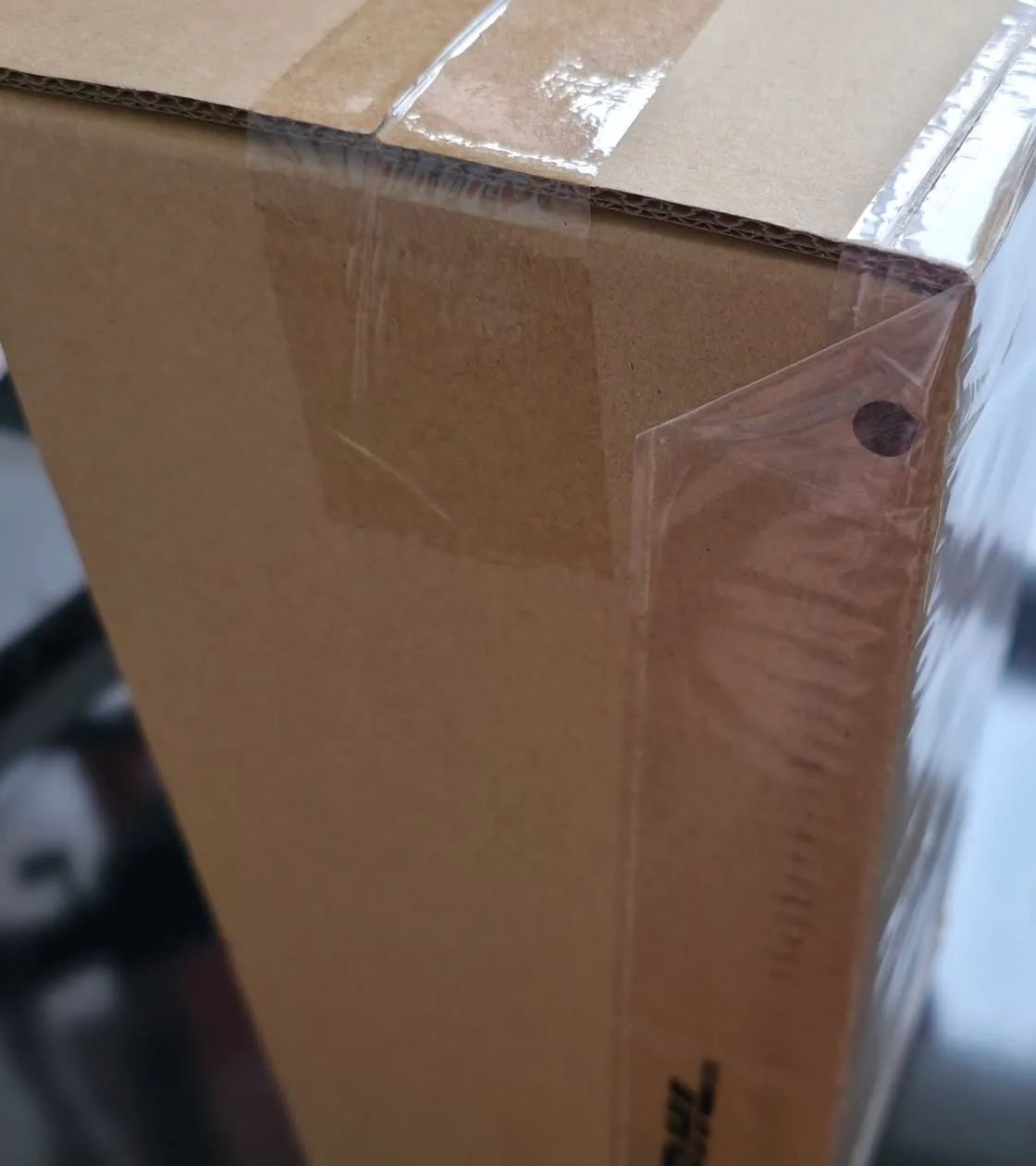
One more loose end: Dyson’s launch promotion advertised an extra toothpaste and mouth-rinse starter kit. My shipment contained the standard CameraJet package and its included consumables, but the promotional extras had not arrived at the time of writing. They may ship separately. They may have been omitted. Living article: we’ll update it when reality answers.
Unboxing: “Why the flying FRACK did they do this?” → “Oh. That’s why.”
The outer shipping box was excellent. Thick brown cardboard. Closely fitted. Almost no wasted volume. No giant STEAL ME, I AM DYSON branding.
Coming from Barcelona, I appreciate anonymous electronics shipping. Inside, the theatre begins.
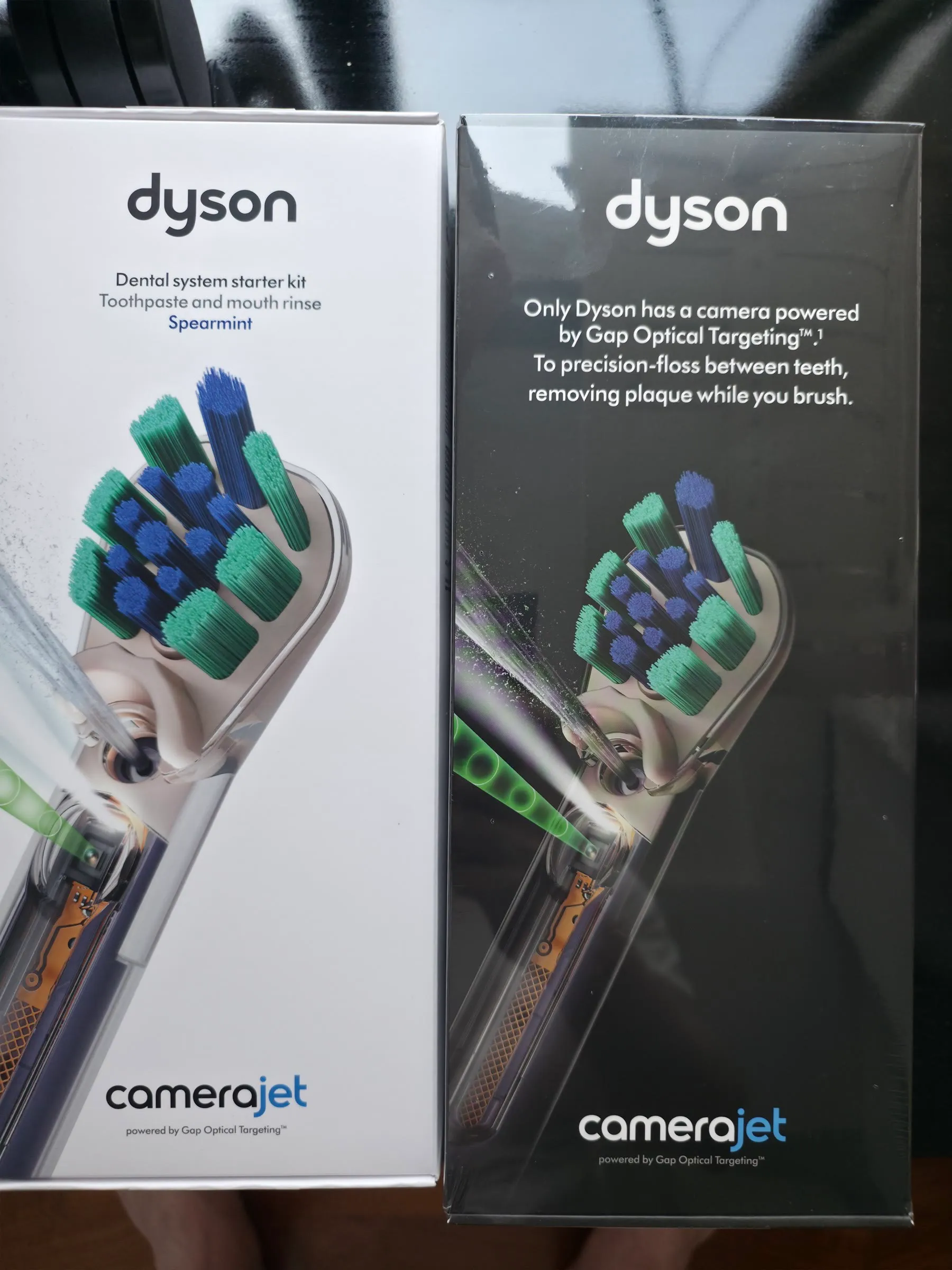
The CameraJet packaging is polished, although the complimentary toothpaste and mouth-rinse packaging is hilariously oversized relative to the actual consumables. 😂 The device itself is not tiny, but neither is it the absurd club some early descriptions made me imagine. Compared psychologically with my Oral-B iO9, it does not feel dramatically larger; we will measure both properly when I have both devices in the same place. For now, the CameraJet feels substantial but balanced.
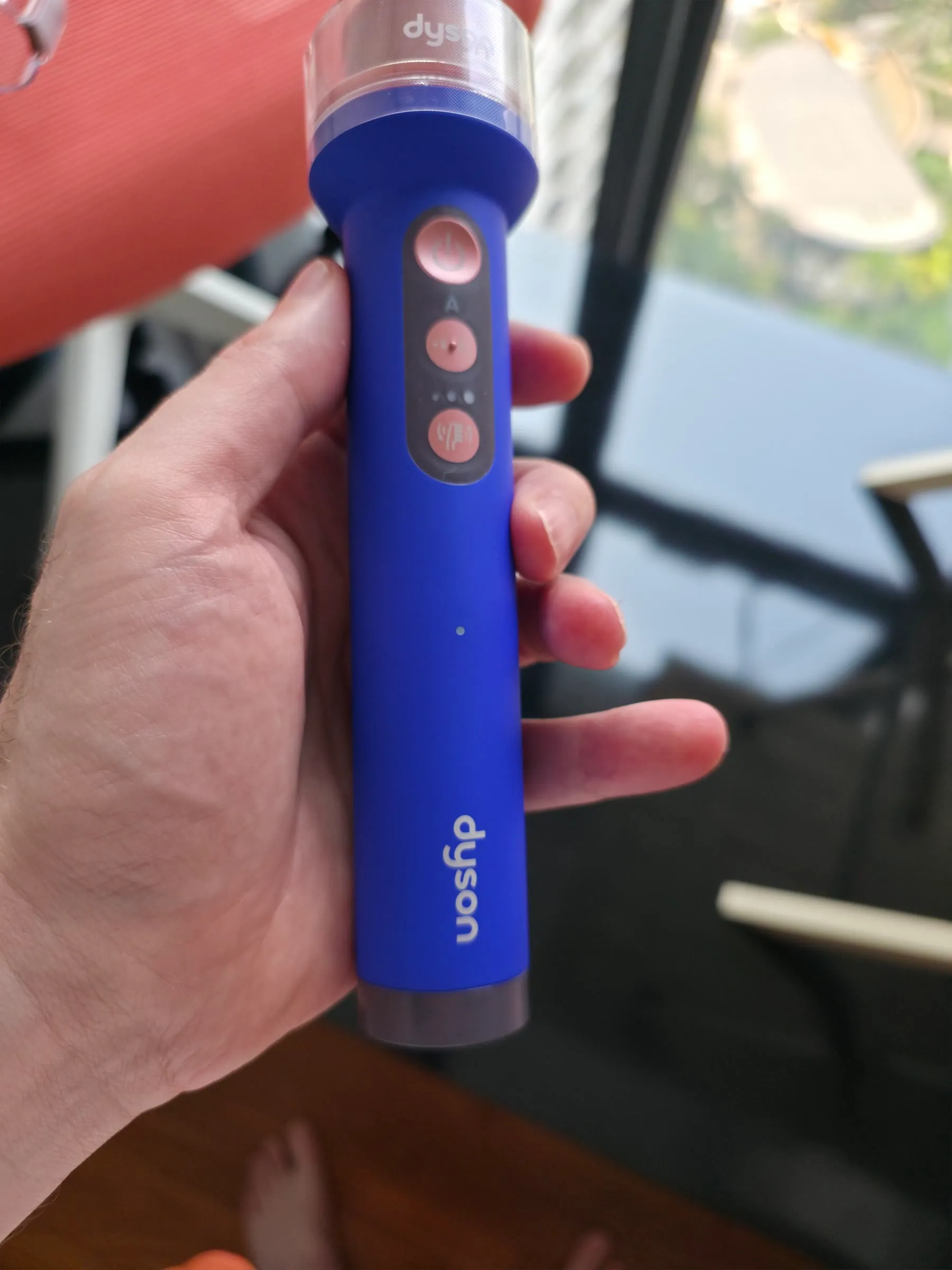
Then you remove the brush head and realize you are holding something resembling a designer screwdriver with:
- a camera,
- an LED,
- a fluid aperture,
- and a toothbrush motor.
The brush head itself is surprisingly engineered. Tolerances are tight. Engagement gives a satisfying positive click. There is an elastomer interface around the base, and the geometry clearly has to coexist with the optical and fluid systems.
This is not just plastic with some bristles glued on. Damn it. I had hoped to make fun of the S$49 replacement heads more aggressively. Unfortunately, somebody appears to have engineered the bastards.
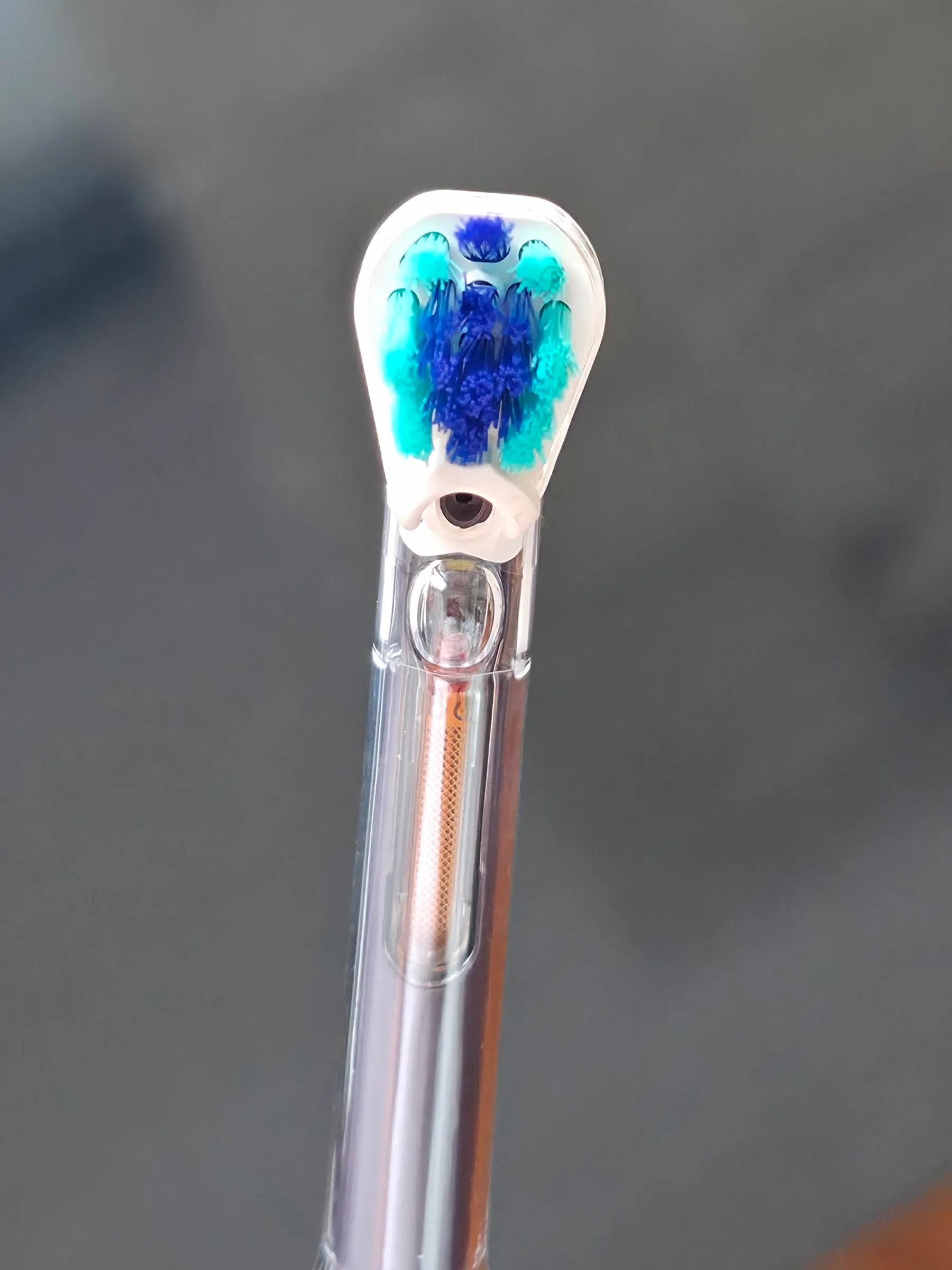
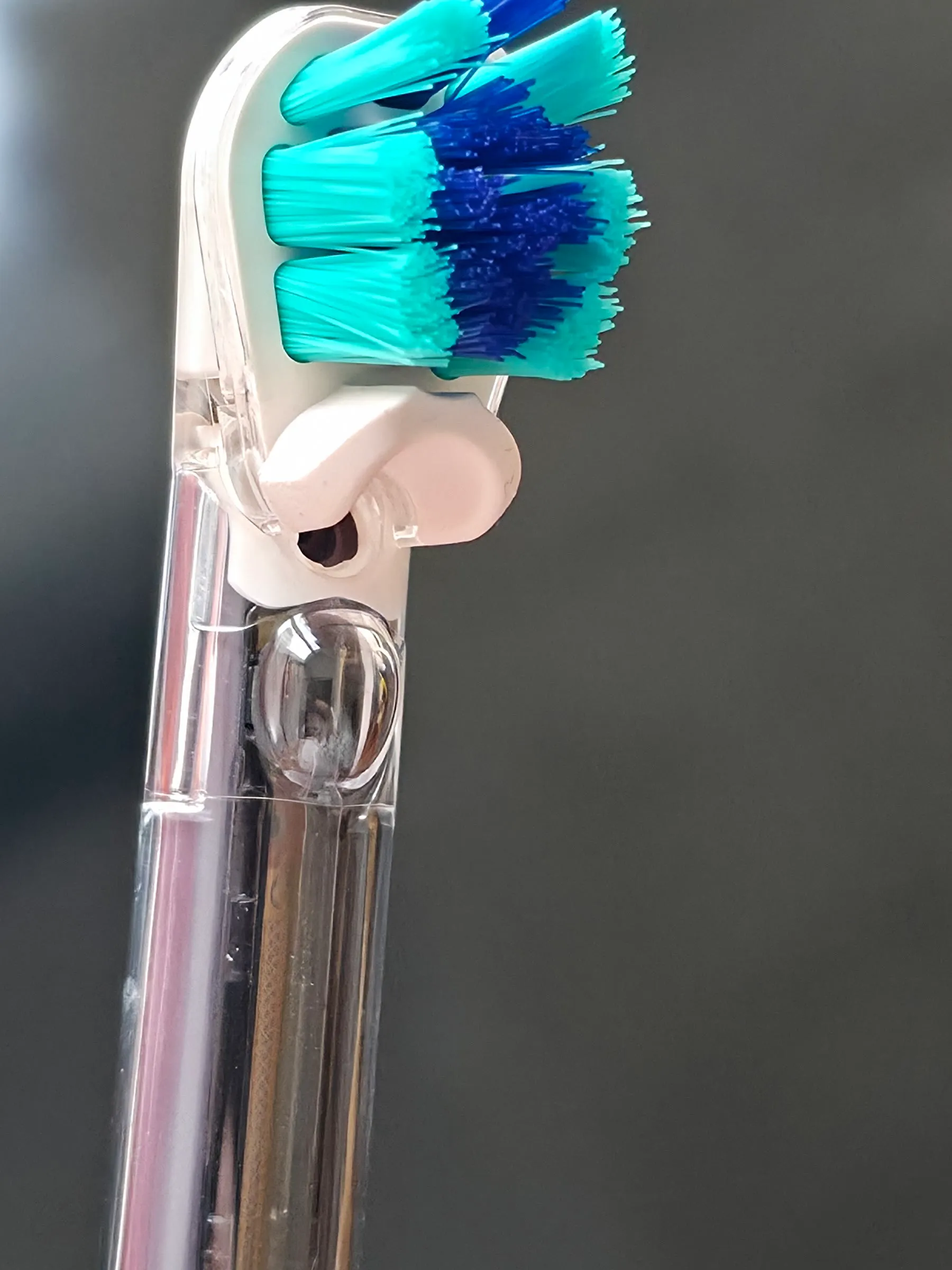
The docking station is completely ridiculous
And annoyingly good. The handset sits in a spring-loaded cradle that aligns:
- mechanical support,
- charging contacts,
- and the fluid-refill coupling.
Docking it feels less like putting a toothbrush away and more like mating two spacecraft. There is spring preload. Alignment. Electrical contact. Fluid coupling.
This is hilarious. It is also difficult to criticize after understanding why it exists. The dock itself looks approximately 70% showroom theatre, 30% necessity. But when you inspect it, the details keep making sense:
- removable stabilizing base;
- tight sliding tolerances;
- silicone/elastomer seals;
- pressure-equalization vent;
- refill architecture;
- charging contacts;
- integrated travel containment.
Dyson apparently decided:
If we engineered a spherical bladder, BY GOD YOU ARE GOING TO LOOK AT IT.
The transparent reservoir is impossible to miss. The dock is rated 5 V / 0.5 A, IP25. My measured idle draw was around 0.1 W.
Charging the handset drew roughly 2 W. A small ~20 W Anker USB power bank powered the dock and charged CameraJet without complaint. So this thing looks like laboratory infrastructure but electrically runs on almost nothing. Very Dyson.
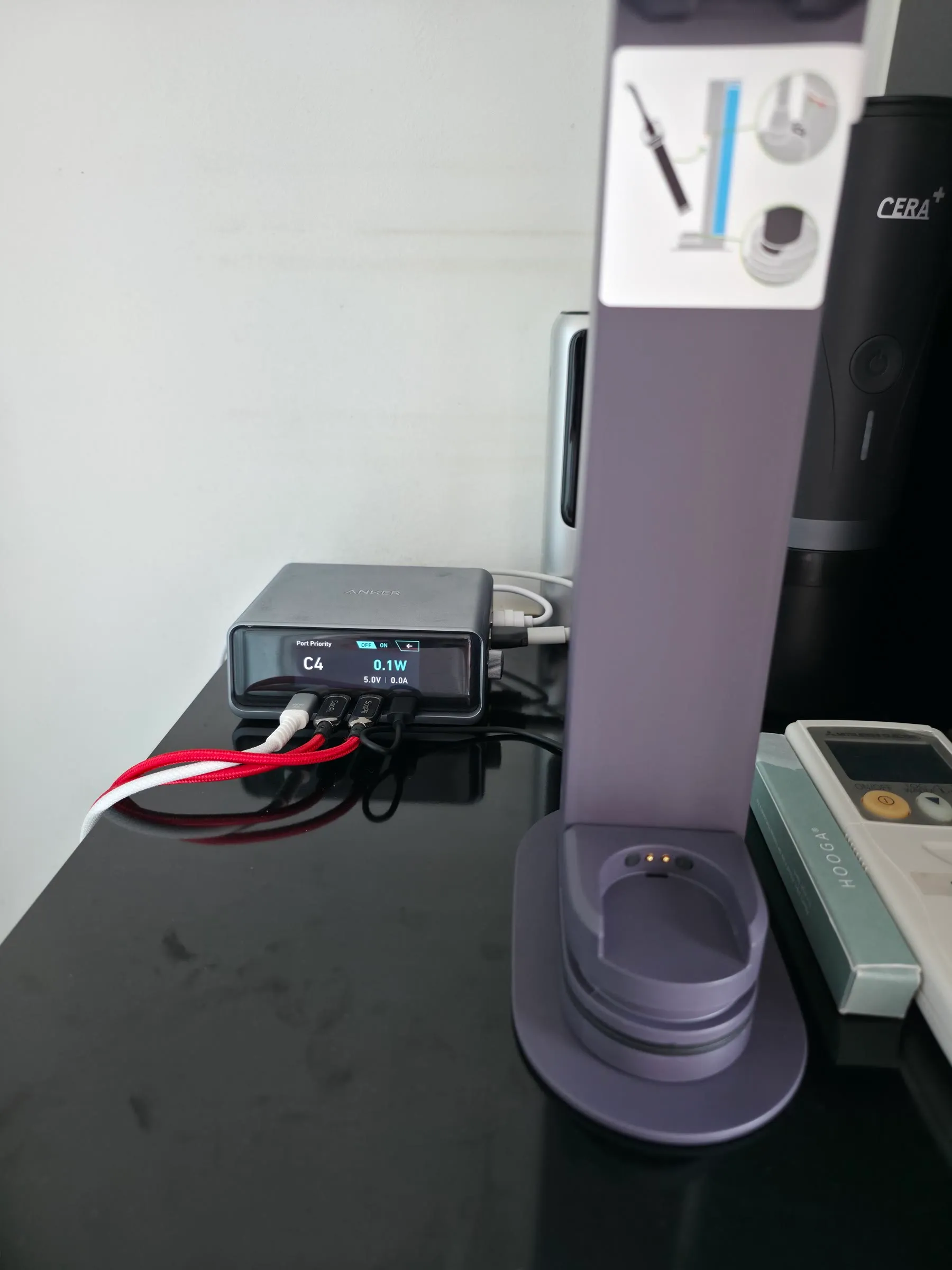
Why the weird pogo charger exists
Before unboxing I had one immediate complaint:
Why the flying FRACK didn’t they just put USB-C on the toothbrush?
Then I finished unpacking it. The dock itself is USB-C powered. The handset normally charges through magnetic contacts in the dock. But Dyson also gives you a USB-C-to-magnetic-pogo cable so you can travel without carrying the entire docking station.
Oh. Fair enough. A permanently exposed USB-C socket on something repeatedly covered in water, toothpaste and saliva would introduce another sealing and cleaning problem. The same magnetic electrical interface handles both dock charging and direct travel charging.
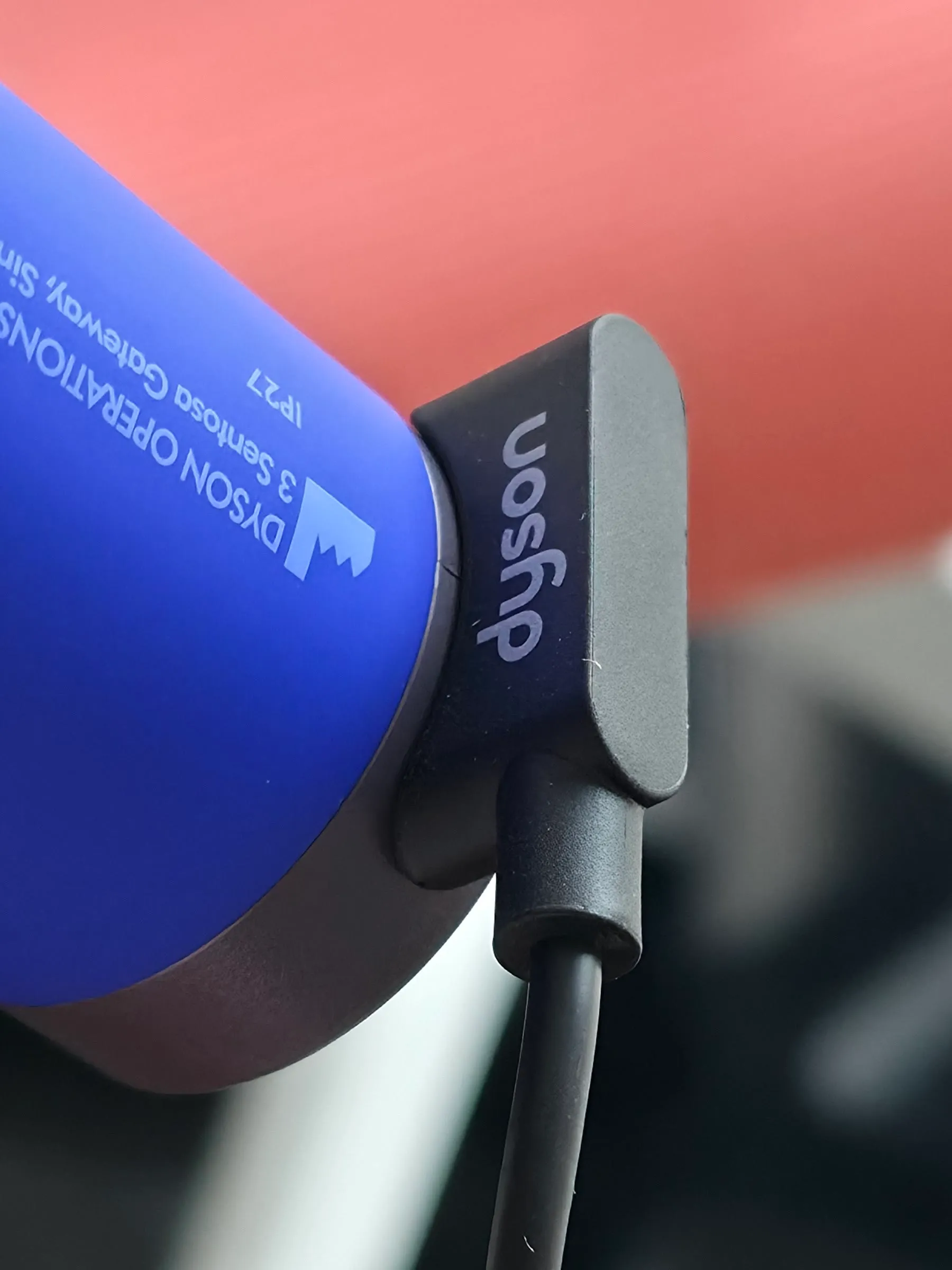
My first hour with CameraJet became a repeated cycle of:
“Why did Dyson do that?”
followed five minutes later by:
“Oh. That’s why.”
Someone at Dyson still believes batteries should be replaceable
This deserves explicit praise. The battery is user-replaceable. One screw. A gasketed interface.
Dyson even documents how to do it. This should not feel revolutionary in 2026. Unfortunately, it does. Good. More of this.
Day-zero cosmetic reality
Mechanically my unit arrived looking excellent. Visually, not completely perfect. The huge clear transport shell already showed fine scuff marks under directional light despite being effectively new. The rear of the spherical reservoir also had a tiny finish imperfection.
And later, under the right external viewing conditions, I noticed a couple of small dust particles that appear to sit somewhere inside the fixed optical path rather than on the removable brush head. They are obvious when pointing the camera at a bright, uniform distant scene. Inside the mouth they largely disappear into the image and do not currently reduce usefulness. That is not a failure.
It is a QC datapoint. The product is Gen 1, and we are watching. If your industrial design makes transparent plastic part of the spectacle, then surface durability and internal optical cleanliness become part of the test. Everything was photographed before use.
And then the software department entered the room
Mechanically, CameraJet kept earning reluctant respect. Then I installed the MyDyson app. Bluetooth pairing was quick. The app looked polished—even on the large inner screen of my Galaxy Fold 7.
Then it asked for Wi-Fi. My reaction:
Why does my toothbrush need my Wi-Fi password?
I attempted to skip it. The app responded with wording roughly equivalent to:
Exit connection setup. Your Dyson product will not be connected.
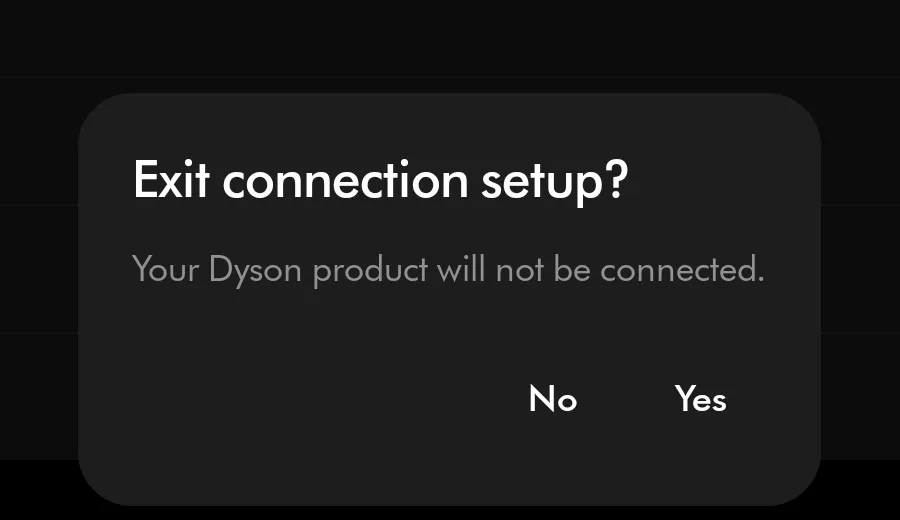
Connected to what—my phone, my Dyson account, the camera or Wi-Fi? Would onboarding abort? Would I have to start again? The wording forced me to infer the consequences, and even after decades of fighting consumer technology my brain took the safe shortcut:
Fine. Take the Wi-Fi password. 🤦🏻♂️ The correct UX would have been simple:
Wi-Fi is optional.
Connecting enables X, Y and Z.
If you skip it, these features will continue working.
You can connect later.
Instead I had to reverse-engineer the question. Dyson spent an extraordinary amount of engineering effort making the physical dock self-aligning, then made the software ask a question whose consequences I had to self-align. Later testing made this even more interesting: CameraJet worked normally when it was not connected to my home Wi-Fi.
Live View, guided functions and the app all worked. That strongly suggests permanent home-network connectivity is not required for the core product once it is set up, although a proper offline/travel test is still coming.
Privacy: better than expected
Camera privacy is one thing Dyson appears to have thought through properly.
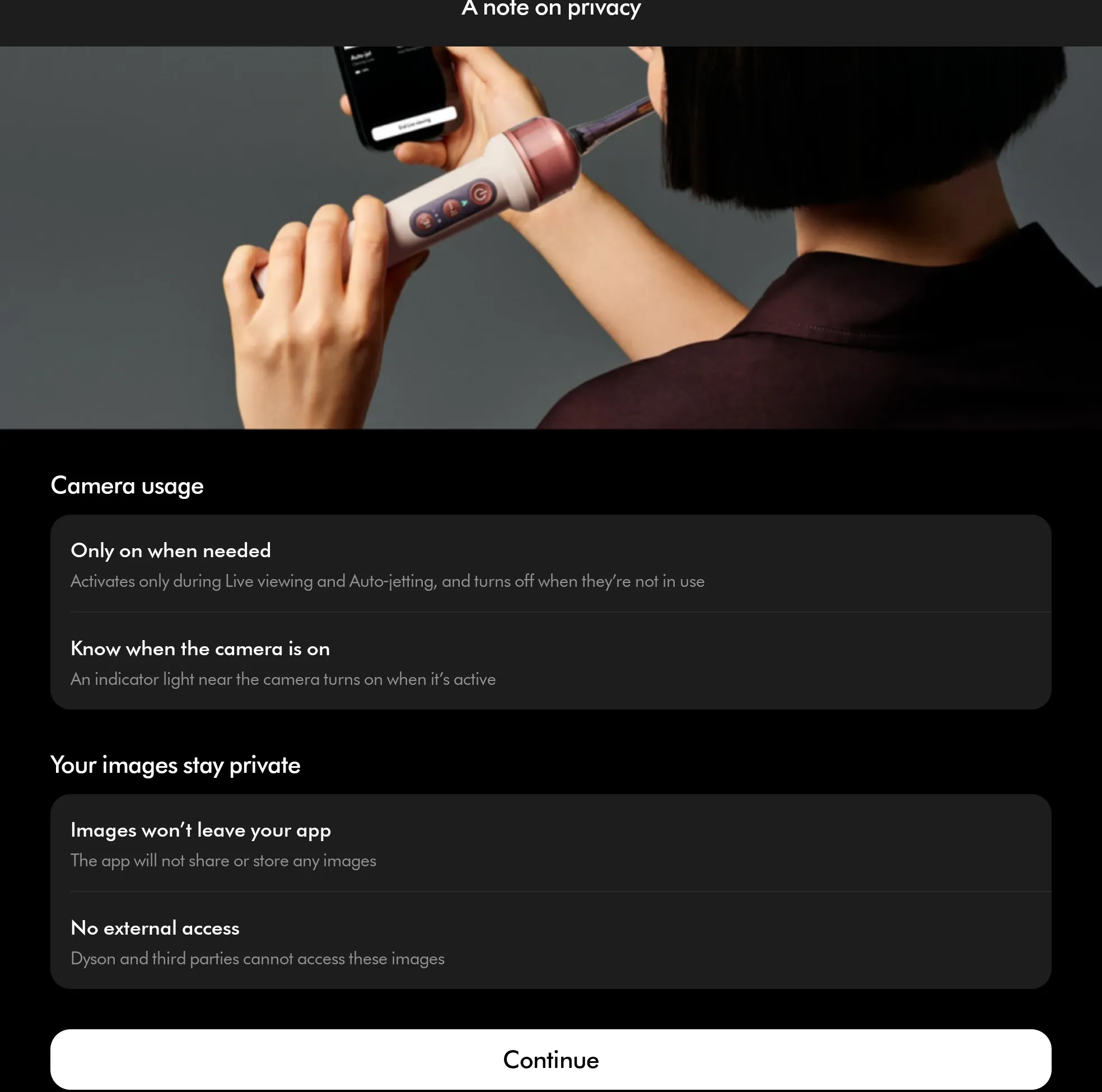
The app explains that:
- the camera activates only when needed;
- an indicator near the camera illuminates when active;
- live images stream to the app;
- they are not stored by Dyson or uploaded to the cloud;
- Dyson and third parties do not get access to the live view.
Good. The app separately asks permission to use cleaning-habit data for “personalized insights.” That wording is much fuzzier. I enabled it for testing.
I did not enable the separate product-improvement telemetry. We will find out whether “personalized insights” eventually produces anything more useful than:
Congratulations, Carlos. You brushed your teeth.
The Great Forced Firmware Betrayal™
I wanted to test CameraJet exactly as it shipped. One of my commandments with new hardware is:
Do not update firmware before establishing the baseline.
Manufacturers have a fascinating habit of making products “better” after launch in ways that occasionally resemble making them slower, quieter, cooler or less ambitious so fewer units die under warranty. Then I reached the main screen and CameraJet was already updating itself. Apparently the toothbrush had opinions. 🤖 There was no meaningful Update now / Later, no Would you like to rewrite the firmware on your S$699 device before using it once?, just:
Updating product. Keep connected to power.
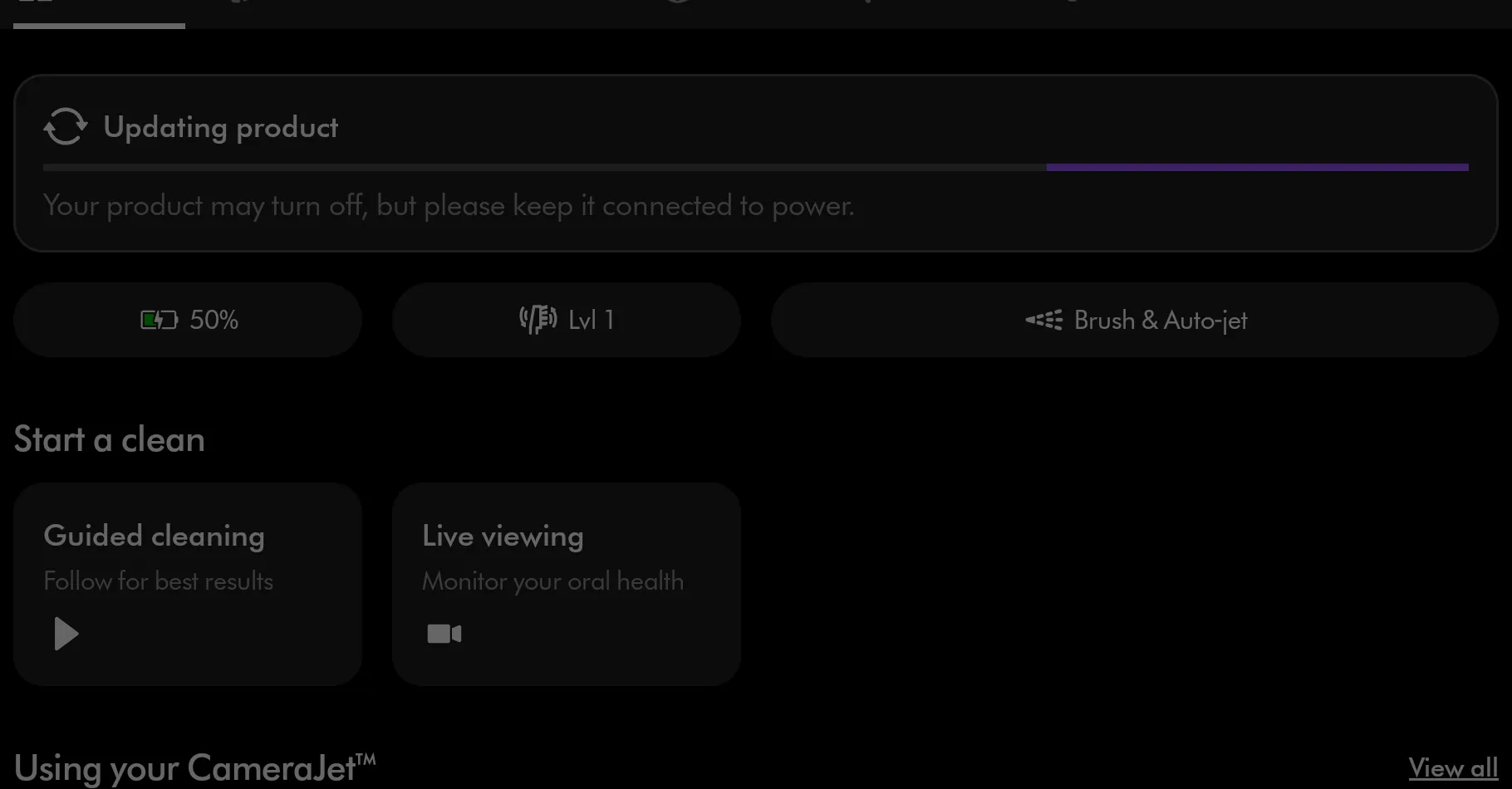
I found the automatic-update toggle and turned it off. Too late: the current update continued.
At that point the correct engineering decision was not to yank power and discover whether Dyson had designed a competent recovery bootloader. So I waited. And waited. Roughly thirty minutes passed during the download/preparation stage.
Then the handset entered the obvious firmware-write state, cycling its three LEDs sequentially. That stage lasted roughly three minutes. Then it returned to normal.
Kage-sensei:
Let me understand this. Dyson engineered a replaceable battery, a gasketed optical assembly, a self-aligning fluid dock and a collapsible reservoir so the toothbrush can work upside down…
…then somebody in software decided “Update now, ask questions never.”
There is always one department.
Fortunately, I captured screenshots with what appear to be both firmware versions. Unfortunately, Dyson supplied no useful changelog—not even the traditional corporate masterpiece 😂:
Bug fixes and performance improvements.
CameraJet finally opens the viewport
This was the moment the entire purchase could have collapsed. The camera was the reason I cared. I mentally prepared myself for a cheap borescope image: bizarre colors, mushy detail, enough pixels to determine that I was probably looking at either a tooth or the anus of an alien. I enabled Live View.
The app makes you physically press a button on the handset to authorize the connection. Excellent. Then I put it inside my mouth. My reaction was:
Oh, nice.
Approximately one second later:
OH SHIT.
And that second reaction is where the product changed. The image is not medical-grade. It is not 4K cinema. It does not need to be.
I could see. For the first time, I could meaningfully inspect areas behind and around my own molars that were effectively inaccessible to me with bathroom mirrors and phone flashlights. The camera quality, color and illumination are good enough that once you learn the working distance and angle, you stop thinking about the camera. You start thinking about your teeth.
That is probably the highest compliment I can give the technology.
The camera became a game changer once I learned how to use it
Within the first day, something strange started happening. Teeth stopped being anonymous. My brain began opening a file on each one. I started recognizing individual molars.
I knew which one had a hard, calcified-looking deposit near the gumline. I knew which surfaces tended to look different. I knew where food trapped. I started navigating directly to them.
That sounds trivial until you realize that for fifty years most of my own mouth had effectively been invisible to me. CameraJet did not diagnose anything: it cannot see what is happening beneath the gumline, tell me whether supporting bone has been lost, or identify what the hard deposit actually is. I have a periodontal specialist appointment already booked. But the difference between seeing almost nothing and being able to inspect the visible reality tooth by tooth is enormous. Once you see, you cannot honestly say you did not know anymore.
And suddenly brushing changes too. If you move the head so the bristles lead and the camera follows, you can see exactly where you have just brushed. You discover surfaces you have been technically “brushing” for years without giving them meaningful attention. A molar chewing surface that mentally received five seconds because “surely that is clean” suddenly becomes:
No. Stay here. Look at that. Brush properly.
That is the behavioral mechanism I hoped CameraJet might unlock. It happened much faster than expected.
Physics tries to ruin the camera
Human mouths are warm, wet alien caves. The optical surface can fog. At first I assumed it was simply external condensation. Then I discovered something more interesting.
The removable brush head seals extremely tightly around the optical assembly. After removing the head in a very humid bathroom, I checked the interface carefully with tissue. No visible liquid ingress. Dry.
I then reattached the head in the humid room and shortly afterward noticed that Live View had developed a soft veil that my normal clearing tricks could not fully remove. Close-up inspection showed tiny droplets on the inner side of the optical interface. My current hypothesis: humid ambient air gets trapped when the tightly sealed head is installed, then later condenses on the optical surface when temperature conditions change.
That is a hypothesis, not a conclusion. I am now testing whether assembling the dry head in a cooler, lower-humidity room consistently eliminates the veil. If it does, this becomes a useful high-humidity field tip:
Clean and dry the head as instructed—but reassemble the optical cavity in low humidity.
This is also important because it is the opposite of what “water ingress” sounds like. On my unit, I have not observed liquid passing from my mouth into the handset housing. The seal appears extremely tight; it may be trapping humid air in, not allowing water through. More testing needed.
Welcome to Australia — but only on the Fold
On Day 0 I thought Live View did not rotate correctly when I flipped the handset to inspect the opposite side of my mouth. Up became down. Left became right. My brain suddenly needed to perform a coordinate transformation while maneuvering a camera behind my molars.
Then I discovered the real behavior. On the Fold 7’s normal external phone display, the Live View image does rotate correctly. On the unfolded tablet-style display, I can reproduce situations where it remains inverted. So this is not missing orientation hardware.
The device clearly has motion sensing—it wakes when moved. This currently looks like a MyDyson Fold/tablet-layout edge case.
Kage-sensei:
Australia has therefore been downgraded from product feature to Samsung-Fold diplomatic incident.
Still silly. But much less damning.
Dyson’s advertised workflow overloaded my brain
Dyson heavily markets the idea that you brush and automatically precision-floss at the same time. I tried that. Twice. It was chaos.
You are trying to:
- brush correctly;
- control pressure;
- move at the right speed;
- keep the handset horizontal;
- position the camera;
- let the system find gaps;
- notice jet events;
- manage saliva;
- spit;
- keep the optical path usable;
- and somehow clean your teeth.
Maybe after a hundred sessions that becomes automatic. For me, on Day 0, it made both jobs worse. So I stopped using CameraJet like the headline feature suggested and started using it like a tool.
Everything changed.
The unlock: separate the tasks
My current workflow is simple. First: inspect, with a quick visual pass. Then: jet—no brushing, just targeted interdental cleaning—and rinse. Finally: brush. Forget the AI and forget the jet; use the camera when it helps you see exactly where the bristles are working.
Suddenly the cognitive overload disappears. The hardware stays converged, but the human interaction becomes decomposed. That may be the key to the whole product.
The dental .50 cal
The jet is hilarious. A normal portable water flosser feels like a hose: continuous stream, spray everywhere, run out of water, tilt it wrong and it sputters. CameraJet feels like firing a precision rifle. THUNK. Stop. THUNK. Stop. Manual triggering is fast enough that you can effectively machine-gun it if you want.
Do not do that to your own gums merely because it is entertaining. Ask Kage-sensei why I am now under supervision. 😅 On a loose paper towel at roughly 10–15 cm, a single shot produces a surprisingly violent impulse; several shots will tear through it.
Yet in my mouth, something unexpected happened. My conventional portable irrigators often make sensitive parts of my gums bleed—even at low settings. During the first CameraJet session I ran multiple reservoirs through my mouth while testing: no blood, no sharp sting and no “skip that area because it hurts.” The next morning produced the same result, and so did another session after eating later that day.
That does not prove CameraJet is clinically safer or better for periodontal disease. It is simply my observation, but it is an important observation for the only mouth I currently own: powerful sensation, less needle-like punishment—at least so far.
The best water flosser I have personally used
This surprised me more than the camera. On Day 0, after several CameraJet passes, I filled my normal portable water flosser and ran the entire tank through the same mouth. What came out afterward? Two microscopic visible particles.
That was it. Later I repeated the cross-check after eating. CameraJet removed visible debris. Then I ran my conventional water flosser through the same known trouble spots.
Nothing else visible came out. Again: one person, one mouth, no clinical measurement. This is not evidence that CameraJet is globally superior to every irrigator.
But for removing loose food debris in my mouth, the repeat result is strong enough that I am comfortable saying:
CameraJet is currently the best oral irrigator I have personally used.
For my particular situation—periodontal disease, posterior food traps and historically inconsistent interdental-cleaning adherence—it is dramatically more pleasant than the irrigators I already own. And because each jet uses so little liquid, you do not spend the entire session trying not to drown yourself.
The AI is a chihuahua
Gap detection works. But it is not the star. You have to learn the tool. You learn the geometry of your own teeth.
Eventually you know where the gaps are before the machine does. Then auto-targeting becomes a helpful little companion:
YAP! 🐕
Thanks, buddy. I was already firing. The fascinating long-term question is: Will Auto-Jet still matter after 30 days?
Maybe the ML is crucial for onboarding and progressively less important once the human operator develops a precise internal map. We will find out. One caution: I noticed Auto-Jet repeatedly firing around one visually interesting molar. That does not mean the AI recognizes deposits or unhealthy tissue.
Dyson documents gap detection. Anything beyond that is currently speculation.
One unresolved anomaly: machine-gun mode
During Auto-Jet testing, the handset suddenly entered what felt like continuous rapid firing. da-da-da-da-da-da-da until the reservoir was essentially empty. I stopped the device.
No damage. It has not happened again. I currently do not know whether:
- I triggered an undocumented button sequence;
- I somehow held manual fire in a particular way;
- Auto-Jet got confused;
- or I found a firmware bug.
I am not reproducing this against my gums. We will test button combinations safely into a sink later. First-generation spacecraft rules apply.
The brush is strangely unremarkable
That is praise. My Oral-B iO9 produced a vibration sensation that seemed to mechanically couple into some teeth in an unpleasant way. CameraJet does not. So far, it just feels like brushing my teeth.
I intentionally tested pressure and different surfaces. The handset provides distinct haptic warnings for excessive pressure and incorrect scrubbing technique. No pain. No bleeding.
Nothing dramatic. The sonic system gets out of the way. That is exactly what good technology should do.
Even the head orientation becomes useful once you learn it
One unexpected benefit of Live View is that brushing stops being blind. If I orient the stroke so the bristles pass first and the camera follows, I can watch where the head has just made contact. That means the camera becomes more than an inspection tool. It becomes positioning feedback.
I can see whether I am actually reaching a molar surface I normally rush over. I can see whether the long bristles are entering the area I intended. I can slow down where the surface still visibly deserves attention. The image quality is not cinematic.
It does not need to be. The feedback is fast enough that after a short adaptation period I find myself looking at the screen rather than the bathroom mirror. That is a completely different brushing experience.
Consumables may matter much less than expected
I started exactly as Dyson intended: Dyson non-foaming toothpaste and Dyson low-foaming mouth rinse. Baseline first, hacks later. But once I separated the workflow, something obvious happened. During jetting, plain water works perfectly well. During brushing, because I am no longer requiring pristine optical gap detection through actively agitated toothpaste slurry, normal toothpaste becomes much more viable.
So the expensive consumables ecosystem may be largely optional for my use case. We will test that properly later. For now, Dyson gets its fair baseline.
Dry-fire protection: someone tested the stupid case
I deliberately tried an edge case: reservoir almost collapsed, tiny amount of water, then fire.
After several empty attempts, the handset stopped itself and illuminated the A indicator amber. Refill properly. Normal operation resumes. Good.
Someone tested the corner case. Another little moment of:
Damn it, Dyson. Fine.
Overfilling: also idiot-resistant, mostly
I also tried to make the reservoir more full than full. Because apparently that needed testing. If you keep holding the dock refill button after the handset reservoir is effectively full, excess liquid appears to route back into the dock reservoir instead of spraying everywhere. Good.
However, after aggressively overfilling during testing and removing/re-docking the handset, I found several drops under the coupling area the next morning. Cause currently unresolved. Could be:
- overfill behavior;
- my re-docking sequence;
- residual liquid at the coupling;
- or a minor sealing behavior worth monitoring.
Photographed. Testing continues.
Battery behavior: strange usage, encouraging result
CameraJet arrived around 50% charged. Charging is not fast. From roughly 50% to 85% took around 92 minutes in my first session. The dock is only rated 2.5 W maximum, so this is not a fast-charge appliance.
During more representative abuse the next morning, I ran CameraJet for roughly 25 minutes, much of it with live video active. Battery dropped around 20 percentage points. The handset became warm-ish, then stabilized. Room temperature was around 28–29°C.
No thermal shutdown. No major video instability. Live View ran continuously for a long stretch. Later, after sitting for several hours, battery had moved from 100% to around 95%.
Too early to conclude anything. Possibilities include networking/background activity, battery-gauge settling or ordinary standby consumption. Future test: 24 hours at 100% with Wi-Fi enabled vs disabled.
Because apparently we now benchmark toothbrush standby drain. 🪥
The morning-after test
This mattered more than any specification. On the first night Kage-sensei explicitly banned me from playing with the .50 cal again. I obeyed—somehow. 😅 The next morning I had coffee, then voluntarily went back to CameraJet. Nobody reminded me.
No notification told me to maintain a streak. No app badge. I simply wanted to inspect my teeth again. And once I started, I stayed there for roughly twenty-five minutes refining technique.
Later, after eating outside, I came home and did it again. This is the strongest early result. The purchase thesis was never:
Does Dyson have impressive hardware?
It was:
Can visibility transform oral maintenance from an invisible chore into an observable system I actually want to maintain?
After one day: yes. That could still be novelty. But the camera is already becoming more useful as I learn it, not less.
My brain is mapping my mouth
This is the part I did not expect. I am beginning to recognize individual teeth. Not just quadrants. Specific molars.
I know which ones I want to inspect first. I know which surfaces trap food. I know which visual irregularities I want the periodontist to explain. CameraJet is giving my brain enough repeated visual telemetry to construct a model of a system that was previously mostly opaque.
That is the kind of technology I actually care about—not technology at the center forcing the human to adapt to it, but technology that gives the human a capability they did not have and then progressively disappears into the task. CameraJet still makes me adapt, a lot. But once I do, I am no longer thinking:
What amazing AI toothbrush technology.
I am thinking:
Show me that molar again.
That is a much more interesting achievement.
So is CameraJet worth S$699?
After one day? For most people: I still have no idea. If you already brush properly, floss properly, see your dentist regularly and need no extra behavioral incentive, S$699 may be hilarious. For me, it is a different human and a different value function: I have periodontal disease and historically inconsistent interdental-cleaning adherence.
Visual feedback changes my behavior dramatically. CameraJet has already:
- shown me areas I could not practically inspect before;
- made me voluntarily clean them;
- made interdental irrigation enjoyable rather than unpleasant;
- helped me understand where I am actually brushing;
- helped me verify whether visible debris remains;
- and made me want to repeat the process the next morning and again after eating.
That is substantial value. Right now, I am 100% happy I bought it. That is not the final verdict.
What I dislike already
Plenty.
- buying/delivery communication was mediocre;
- Wi-Fi onboarding was ambiguous;
- forced firmware update annoyed me;
- no useful firmware changelog;
- Fold/tablet Live View orientation has an edge case;
- optical clarity is sensitive to humidity/assembly conditions;
- internal factory dust is visible under some conditions;
- simultaneous brush+jet operation overloads me;
- large transparent surfaces already show cosmetic marking;
- one unexplained rapid-fire event occurred;
- the missing promotional consumables remain unresolved;
- Gen-1 reliability is completely unknown.
Launch-week reports from other users already include allegations of very early CameraJet failures and possible moisture-related faults. Those are anecdotal reports, not failure-rate data. My unit currently behaves correctly. Let’s see whether that sentence survives six months.
What CameraJet actually is
After one day, my mental model has changed. It is not a toothbrush. The toothbrush is almost incidental. It is an advanced oral-maintenance tool containing:
- inspection,
- targeted irrigation,
- brushing,
- technique feedback,
- live visualization,
- and enough instrumentation that you can begin building a mental model of your own mouth.
It does not replace a dentist. It cannot tell me what is happening below the gumline. It cannot diagnose the hard deposit I can now see behind a molar. It cannot tell me whether periodontal support is being lost.
I have a periodontal specialist appointment booked for October 2, and that appointment will become part of this living review. Then we get to compare what I thought I was seeing with what professional periodontal measurements and imaging say is actually happening. That is where this gets really interesting.
Current Day-1 verdict
- Camera: game changer for my use case.
- Jet: shockingly good.
- Brush: pleasantly boring.
- AI targeting: useful assistant; probably not the long-term star.
- Dock: absurd and annoyingly well engineered.
- App: polished education, questionable decisions.
- Firmware policy: not impressed.
- Consumable lock-in: appears far less serious than feared.
- Price: expensive.
- Value to me: currently high.
- Long-term reliability: completely unknown.
- Long-term adherence: the metric that decides everything.
And that is why this article stays alive. If CameraJet is sitting pristine in a drawer beside my Oral-B iO9 three months from now, it failed. If I am still voluntarily using it every day because I can finally see and understand what I am maintaining? Then the stupid S$699 spacecraft may have solved exactly the problem I bought it to solve.
Kage-sensei:
Carlos is also currently prohibited from repeatedly firing the
.50 calat his own gums “for science.”Longitudinal testing therefore may progress slightly slower than the operator would prefer.
Next updates
- true offline / no-home-Wi-Fi behavior;
- shipping vs updated firmware versions;
- humidity/condensation test;
- internal dust stability;
- sensitive brush head;
- plaque-disclosing experiment;
- jet consistency and machine-gun anomaly;
- dock overfill behavior;
- battery/session life;
- brush-head wear;
- 30-day adherence;
- periodontal specialist reality check on October 2;
- 60/90-day durability.
Outcome unknown. Good. That is the point.